Ein Berliner
- Game design
- Graphic design
An original board game set in divided Berlin, inspired by the video game Papers, Please! I designed the game board, the layout of the checkpoints and the game mechanics.
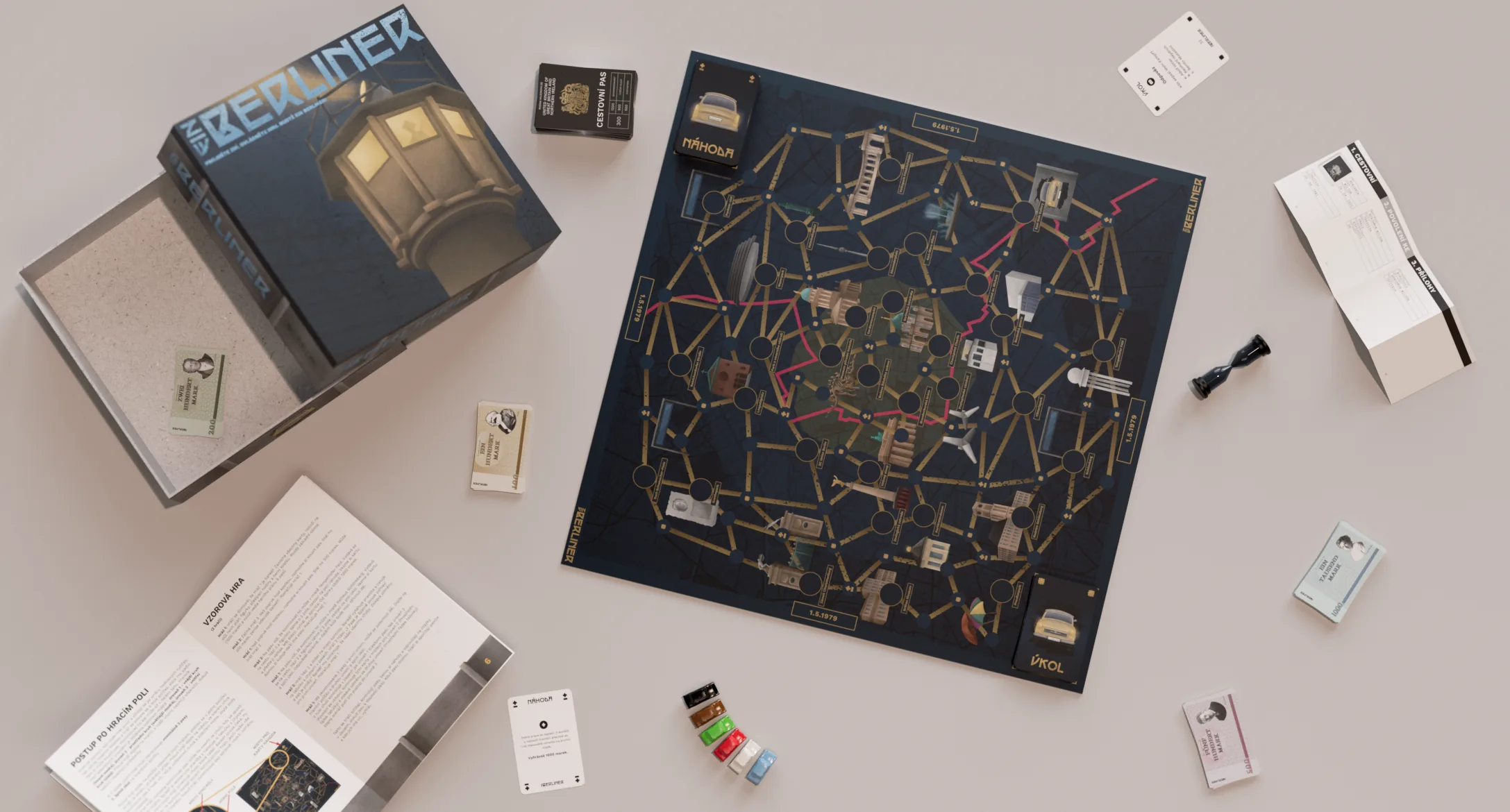
The Cold War on a single table.
The game was my very first end-of-term project at VŠKK, supervised by Martin Strnad of HMS Design studio. The brief was simple: build a board game from scratch that actually works. We borrowed the atmosphere from indie games like Papers, Please! and moved the story to the border between East and West Berlin.
Players act as border guards under time pressure, checking passports, spotting mistakes, answering history questions and completing tasks. By the end we had a finished game with its own cards, currency, game board and rules.
Berlin, based on real plans.
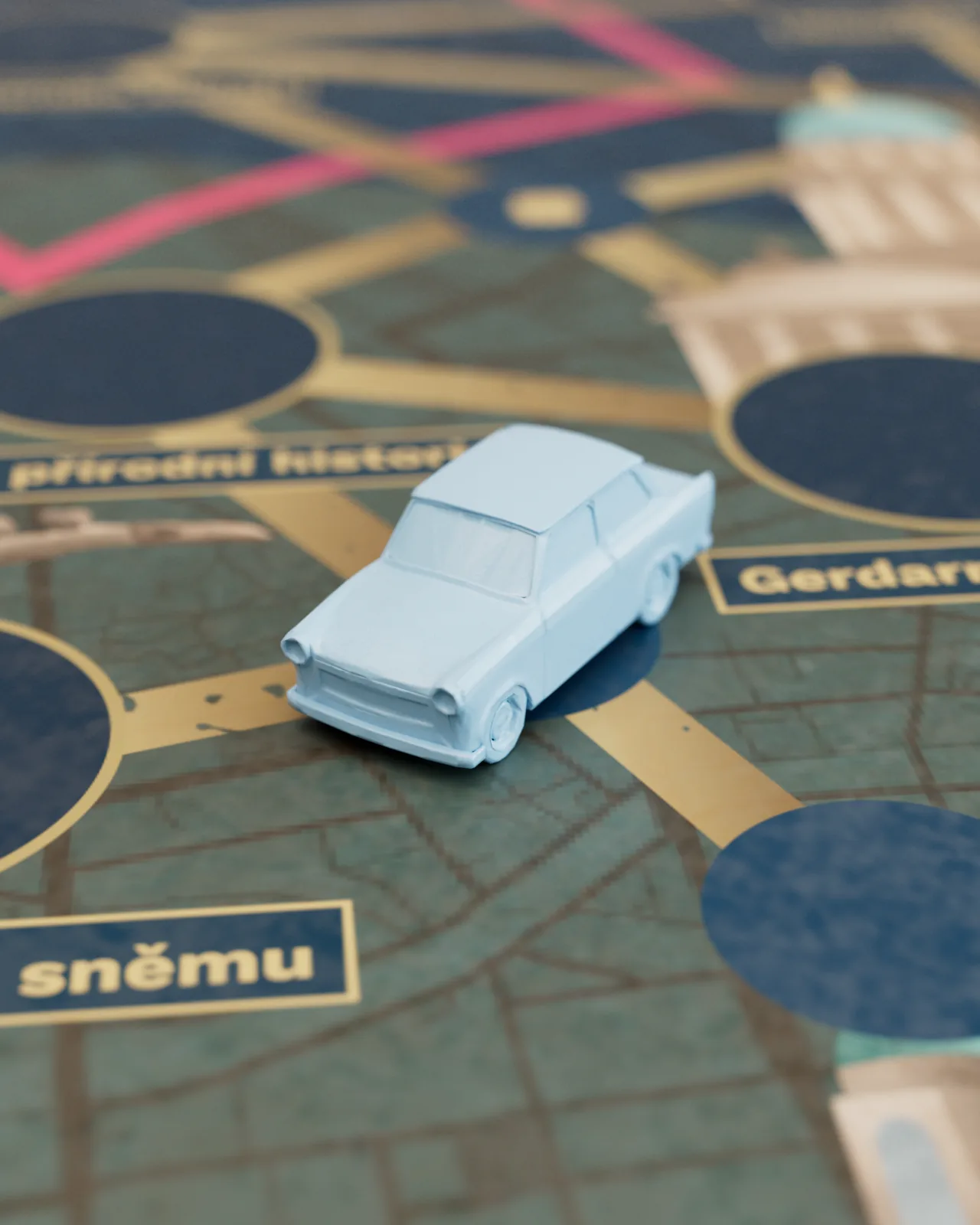
My main job in the team was the game board, which was mine from start to finish. I put it together from real plans of Berlin, satellite images and every map I could find. I vectorised the map and adjusted it by hand to fit our needs. I drew every location to scale so it matched reality while still making sense for the flow of the game. I placed the checkpoints so they followed on from each other logically, and the mechanics grew along with them.
-
Research
Plans of Berlin, satellite images and every map available.
-
Vectorising
The map converted to vectors and adjusted by hand for the game.
-
Checkpoints
Places drawn to scale and checkpoints laid out so the game flows.
-
Mechanics
Rules that keep up the pace and tension of the whole game.
From a school project to the publishers.
It was meant to be “just” a school assignment, but the project grew into something bigger. At VŠKK it earned top marks for originality and complexity. Over the next 14 days we redrew the artwork, had a professional prototype made and got a unique opportunity:
“We presented the whole concept to the publishers Albi and Dino.”
In the end, the game didn’t go into production. The experienced publishers found the core mechanics a little dated, and today’s market calls for a different kind of play. For me and the whole team, though, it was incredibly valuable real-world feedback.
It was my first big test of designing a complex product from scratch under time pressure. I learned to think not just about the graphics, but above all about how players feel at the table and how the rules shape their behaviour. For the first time, I pitched my own idea to major players in the market and understood how big the gap is between a “nice idea” and a finished product for the mass market.